
You have a vision for a mobile app, and you’ve chosen Flutter because you want to hit both iOS and Android without burning through two separate budgets. But now you’re stuck on the most uncomfortable question in software development: “How much will this actually cost?”
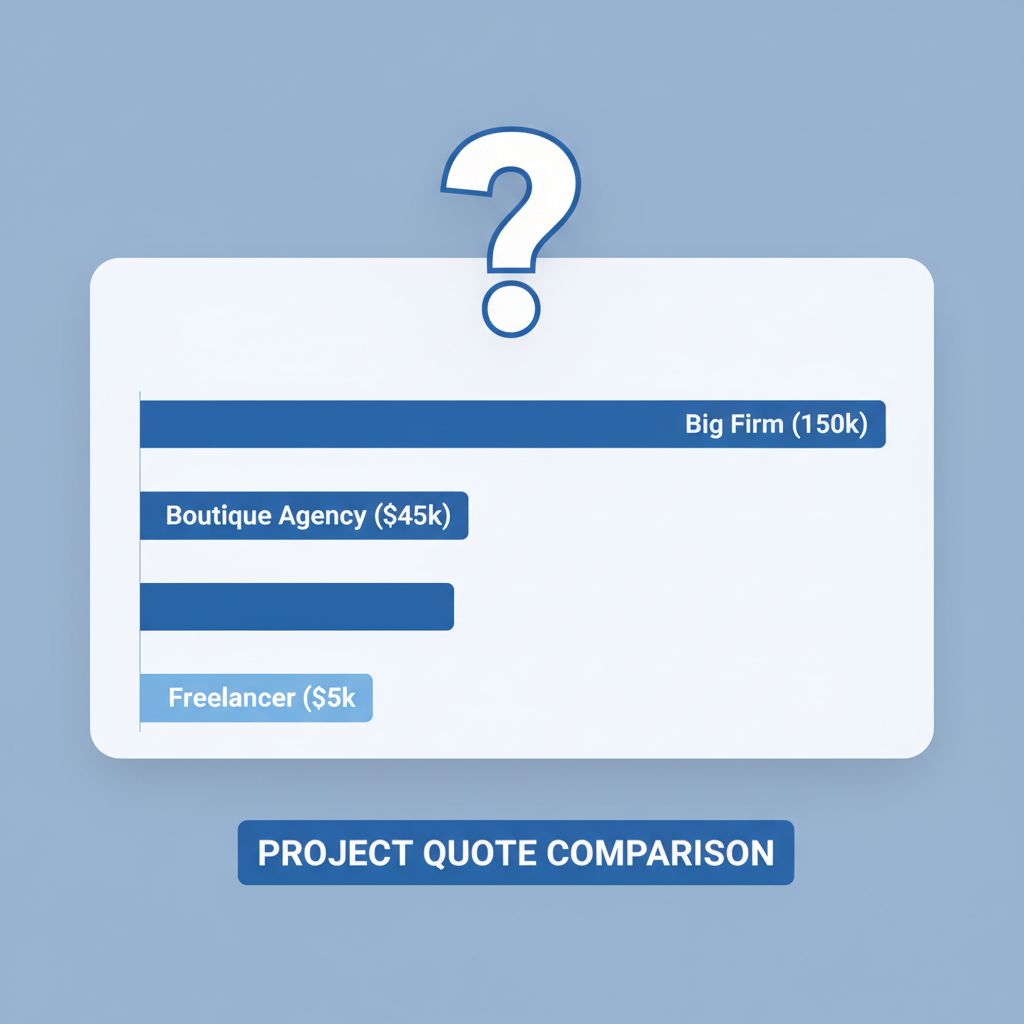
If you are searching for cross platform app development services USD, you are likely staring at a confusing spread of numbers. One agency quotes $15,000, another quotes $120,000, and a freelancer says they can do it for $30/hour. It feels like throwing darts in the dark.
I’ve been building production Flutter apps for over five years, working with everything from bootstrapped startups to enterprise scale-ups. I have sat on both sides of the table—writing the code and helping CTOs plan their budgets. I know exactly where the money goes, where it gets wasted, and where the “hidden costs” usually bury themselves.
This article isn’t a sales pitch. It’s a reality check. We are going to break down exactly how to estimate costs for a Flutter project in the US market, dissect the pricing models, and look at the actual math developers use to estimate your features.
The Problem: The “Black Box” of App Pricing
The core problem isn’t just that apps are expensive; it’s that the pricing models often feel arbitrary. As a founder or CTO, you provide a feature list, and you get back a number that seems to have no correlation to the effort you imagine is involved.
In traditional manufacturing, if you want a chair, you calculate the wood, the screws, and the labor. In software, “Login with Google” might take 2 hours or 20 hours depending on your security requirements, backend infrastructure, and legacy data. This variability creates a “Black Box” where you feel like you are being upcharged for things you don’t understand.
Why This Happens: The “Write Once” Myth vs. Reality
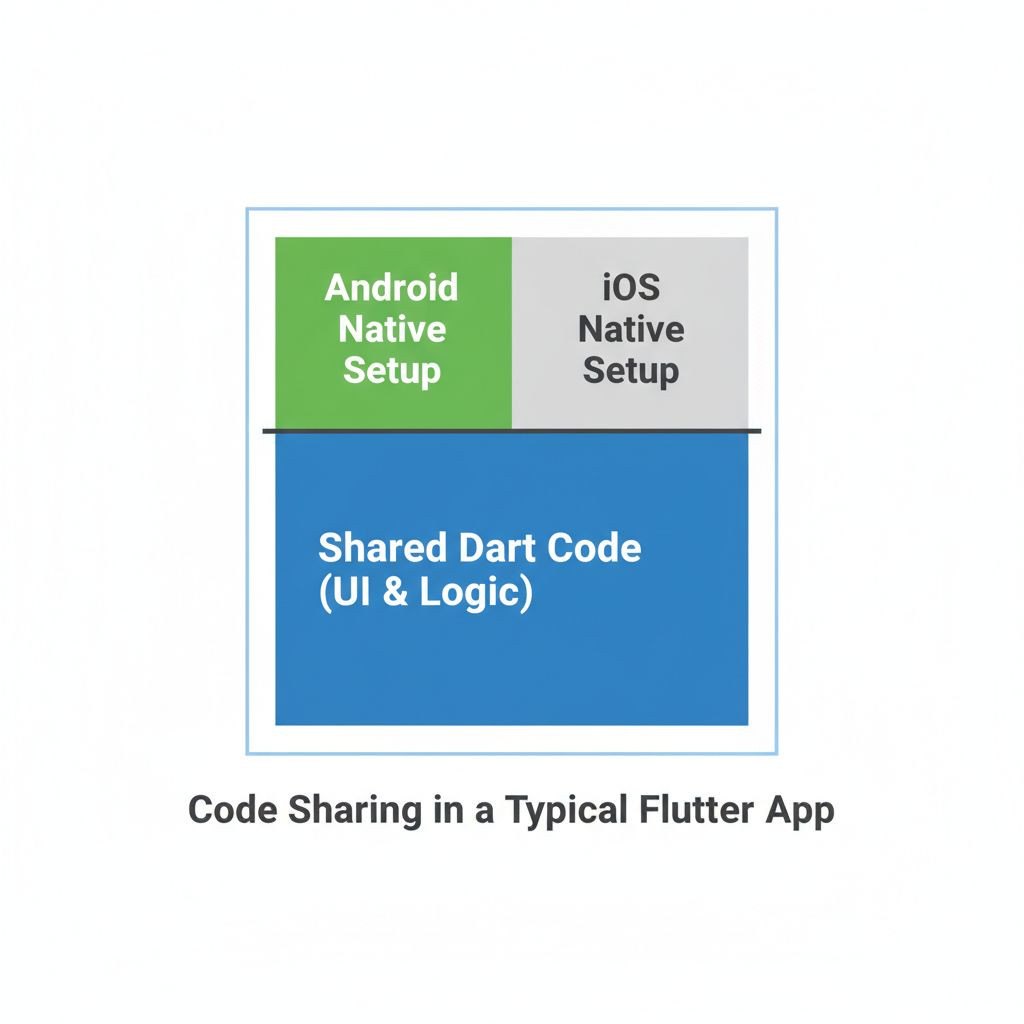
The primary driver of confusion in cross platform app development services USD is the misunderstanding of how Flutter actually saves money. The marketing slogan is “Write Once, Run Anywhere.” This leads stakeholders to believe that a Flutter app should cost exactly 50% of building two native apps.
In reality, the savings are usually closer to 30-40%, not 50%. Why? Because while the UI logic is shared, the Platform Channels (the bridges to native features like Camera, GPS, and Bluetooth) often require specific tuning for iOS and Android. Additionally, QA testing still needs to happen on both platforms.
The cost isn’t just “typing code.” It is the architectural complexity of handling two different operating systems with one codebase.
When You Usually Face This Issue
You will typically hit this pricing wall during three specific phases:
- The MVP Phase: You have a fixed budget (e.g., $50k) and need to know if Flutter fits.
- The Scaling Phase: Your MVP was cheap, but now you need “enterprise” features, and the hourly rates are skyrocketing.
- The Rescue Mission: You hired a cheap team, the code is a mess, and now you are paying a senior developer double to fix it.
Quick Fix Summary: 2026 Market Rates (USD)
If you just want the raw numbers to plug into your spreadsheet, here is the current landscape for US-based or US-standard quality cross platform app development services.
- Freelancer (Junior/Mid): $40 – $75 / hour. Good for small tasks, risky for full architecture.
- Senior Consultant / Expert: $100 – $180 / hour. Necessary for architecture and complex features.
- Boutique Agency (US/Western): $15,000 – $50,000 for an MVP (3-4 months).
- Enterprise Agency: $100,000+ for scalable, secure, compliant applications.
- Maintenance: Typically 15-20% of the initial development cost per year.
Step-by-Step Solution: The Developer’s Estimation Logic
To understand the cost, you need to think like a developer. When you ask for a feature, we don’t just guess a price. We mentally break it down into a logic structure. Understanding this will help you negotiate better and spot padded estimates.
Here is how a Senior Flutter Developer calculates the effort for your features. I’ll use Dart code to represent the mental model we use.
1. The Complexity Formula
Every feature has a base cost, a complexity multiplier, and an integration tax.
class FeatureEstimate {
  final String name;
  final double baseHours;
  final double complexityMultiplier;
  final bool requiresBackend;

  FeatureEstimate({
    required this.name,
    required this.baseHours,
    this.complexityMultiplier = 1.0,
    this.requiresBackend = false,
  });

  double get totalHours {
    // Backend integration usually adds 50% more effort for data modeling and error handling
    double backendTax = requiresBackend ? 1.5 : 1.0;
    return baseHours * complexityMultiplier * backendTax;
  }
}

void main() {
  // Example: A simple "Profile Page" vs a "Social Feed"

  final profilePage = FeatureEstimate(
    name: "User Profile",
    baseHours: 8, // Layout is simple
    complexityMultiplier: 1.0,
    requiresBackend: true, // Fetch user data
  );

  final socialFeed = FeatureEstimate(
    name: "Live Social Feed",
    baseHours: 20, // Complex list rendering, caching
    complexityMultiplier: 2.5, // Pagination, infinite scroll, media handling
    requiresBackend: true,
  );

  print("${profilePage.name}: ${profilePage.totalHours} hours");
  print("${socialFeed.name}: ${socialFeed.totalHours} hours");
}
Why this matters: A “Social Feed” isn’t just a list. It involves pagination, caching, image optimization, and error states. If an agency quotes you 20 hours for a social feed, they are likely skipping error handling or caching. If they quote 100 hours, they might be over-engineering it. The code above shows the variables that actually drive the cost.
2. The “Buy vs. Build” Factor (Pub.dev)
One of the biggest cost-savers in Flutter is the ecosystem. Before we estimate custom code, we check pub.dev (the official package repository for Dart and Flutter). If a reliable package exists, your cost drops significantly.
// pubspec.yaml - The file that saves you money

dependencies:
  flutter:
    sdk: flutter

  # Instead of paying $5,000 to build a custom calendar:
  table_calendar: ^3.0.0  # Free, open source, well-maintained

  # Instead of paying $2,000 to implement Google Maps from scratch:
  google_maps_flutter: ^2.2.0

  # Instead of paying $10,000 for a custom chart engine:
  fl_chart: ^0.55.0
The Takeaway: When negotiating cross platform app development services USD, ask the developer: “Are there existing packages we can use to reduce the cost of this feature?” A good developer will say “Yes, we can use `table_calendar`.” A bad developer will try to charge you to reinvent the wheel.
Common Mistakes Developers & Founders Make
In my years of consulting, I see the same financial mistakes repeated constantly.
1. The “Fixed Price” Trap
Fixed-price contracts seem safe for founders, but they often lead to lower quality. If a developer underestimates the work on a fixed contract, their incentive is to rush and cut corners to maintain their margin. You get a product that looks right but crashes under load.
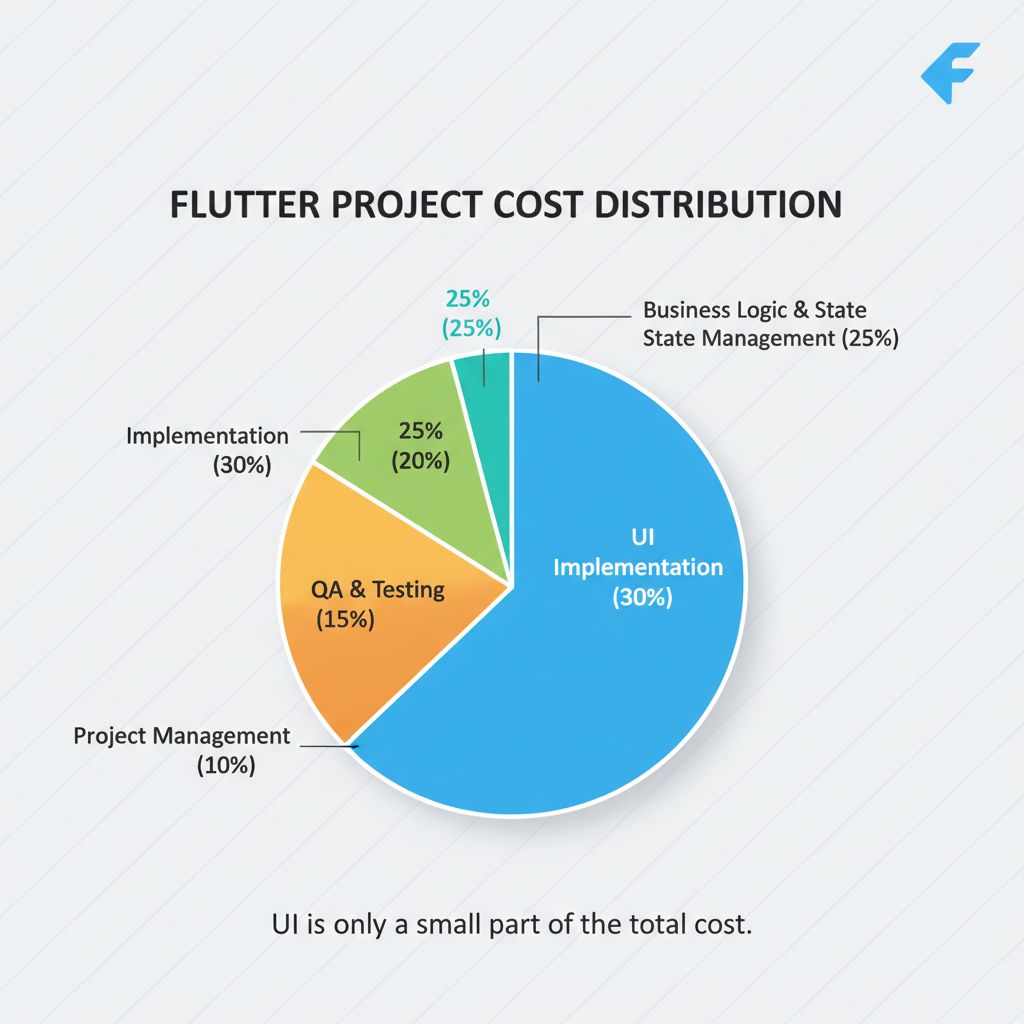
2. Ignoring State Management Costs
Simple apps are easy. Apps that need to sync data across three screens, a database, and a notification service are hard. Founders often ignore the cost of “State Management” (how data moves through the app). A robust setup using tools like Bloc or Riverpod takes time to set up upfront but saves thousands of dollars in maintenance later.
3. The “Hybrid” Team Fallacy
Some companies try to hire one junior Flutter developer and one senior Native developer. This rarely works. You are better off with a specialized Flutter agency or a senior Flutter freelancer who understands the specific quirks of the framework.
Warnings and Practical Tips
⚠️ Warning: The “Hourly Rate” Illusion
A developer charging $40/hour who takes 100 hours to build a login screen costs you $4,000. A senior developer charging $150/hour who does it in 10 hours costs you $1,500. Do not optimize for the lowest hourly rate; optimize for the total cost of delivery.
💡 Tip: Ask for a “Discovery Phase”
Never sign a full development contract without a paid Discovery Phase (usually 1-2 weeks). This allows the technical team to audit your requirements and provide a realistic estimate. It is a small investment that prevents massive budget overruns.
⚠️ Warning: Third-Party APIs
Your Flutter app might be cheap to build, but if it relies on Google Maps API or a paid video streaming service, your operating costs can be huge. Always calculate the monthly API costs alongside development costs.
Edge Cases and Limitations
While Flutter is excellent for 90% of apps, there are edge cases where the cost might actually be higher than native development:
- Heavy AR/VR Apps: If your app is purely Augmented Reality, Flutter is just a wrapper. You will be writing mostly native code anyway, so the cross-platform benefit is lost.
- Complex Bluetooth Hardware Integration: Debugging Bluetooth on Android vs. iOS is notoriously difficult. Flutter adds a layer of abstraction that can sometimes complicate low-level hardware debugging.
What Happens If You Ignore This Problem
If you proceed without a clear understanding of these pricing models, you risk the “90% Done” syndrome. This is where you spend 100% of your budget to get the app 90% finished, but the final 10% (polish, bug fixes, store submission) requires more money than you have left. This is the graveyard of many startups.
Additionally, choosing the cheapest cross platform app development services often leads to “Spaghetti Code.” Two years later, when you want to add a new feature, the developers will tell you, “We need to rewrite the whole app.” That is the most expensive conversation you can have.
FAQ Section
1. Is Flutter cheaper than React Native in 2026?
Generally, they are comparable in cost. However, Flutter often has a slightly faster development velocity for complex UIs due to its pre-built widget library, which can result in 10-15% savings on UI-heavy apps.
2. How much does it cost to maintain a Flutter app?
Plan for 15-20% of the initial development cost annually. This covers Flutter SDK updates (which are frequent), iOS/Android requirement updates, and minor bug fixes.
3. Should I hire a freelancer or an agency?
If your budget is under $15k, a freelancer is your only real option. If your budget is over $50k and this is a core business asset, an agency provides the stability, QA, and project management that a single freelancer cannot.
4. What is the average hourly rate for Flutter developers in the US?
For 2025-2026, expect to pay between $100 and $180 per hour for senior-level US-based talent. Offshore rates vary but typically range from $30 to $60 for high-quality output.
Final Takeaway & Conclusion
Estimating the cost of cross platform app development services USD doesn’t have to be a guessing game. It is a calculation of complexity, expertise, and risk management.
Your Actionable Checklist:
- Define your MVP features ruthlessly. (Do you really need Dark Mode in version 1?)
- Check flutter.dev or pub.dev to see if your complex features have existing packages.
- Ask potential developers for a breakdown of hours per feature, not just a total price.
- Prioritize “Total Cost of Ownership” over “Hourly Rate.”
Flutter is a powerful tool that can save you significant money compared to native development, but only if you manage the scope and hire developers who understand the architecture. Don’t look for the cheapest quote; look for the most transparent one.